Together, we’re driving regional collaboration to new heights!
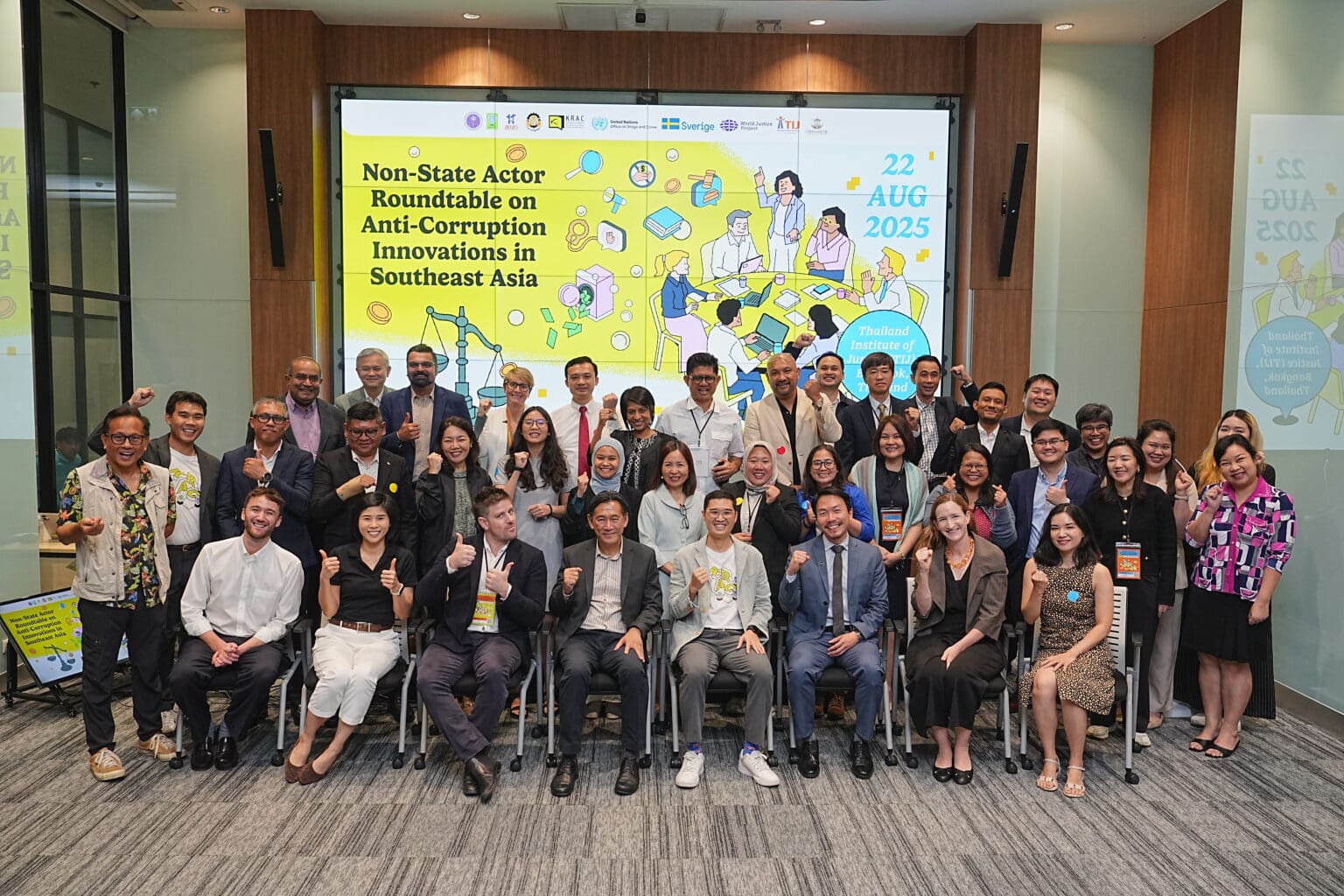
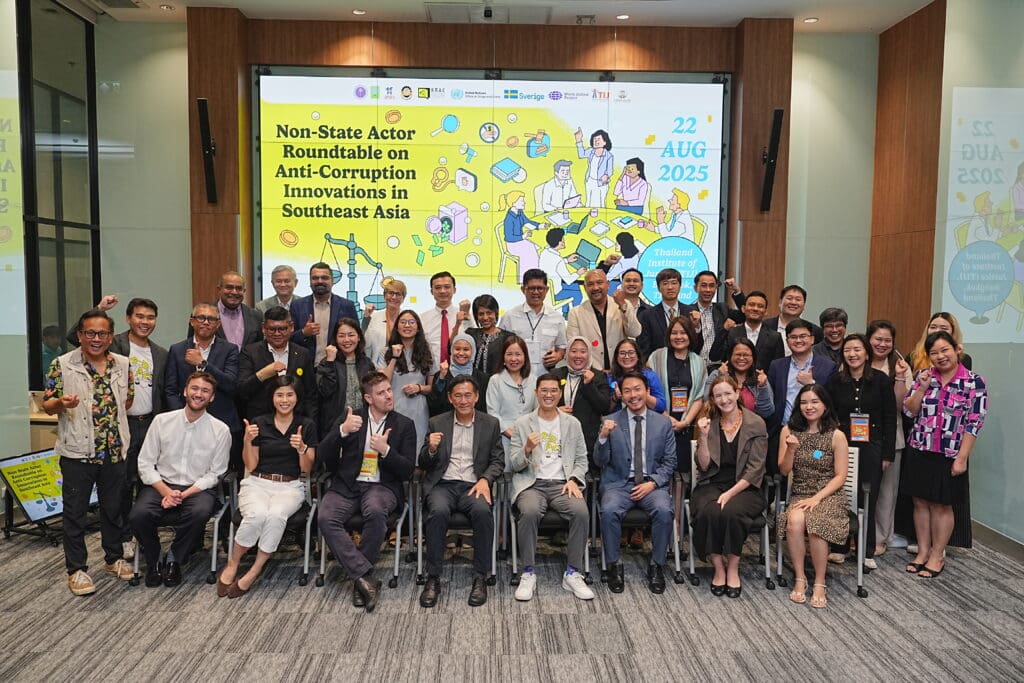
On 22 August 2025, at the Thailand Institute of Justice (TIJ), KRAC – in collaboration with the United Nations Office on Drugs and Crime (UNODC), the Chandler Institute of Governance, and TIJ – co-hosted the Non-State Actor Roundtable on Anti-Corruption in Southeast Asia.
This roundtable was organized with two key objectives including – first, to provide a dynamic platform to highlight the growing momentum of regional collaboration over the past year, showcasing initiatives such as the Southeast Asia Anti-Corruption Network (SEA-ACN), the Journalists Against Corruption (JAC) network, and TIJ’s Rule of Law and Development Program (RoLD); and second, to create a space for civil society to connect, strengthen anti-corruption and governance networks, and explore opportunities for forging new partnerships.
This year, participants were divided into three focus groups to foster in-depth discussions on key issues, including (1) Beneficial Ownership Transparency & Emerging Technologies – risks and opportunities, (2) Open Data for Anti-Corruption – with a focus on Politically Exposed Persons (PEPs) as a tool for journalists, and (3) Government Procurement Transparency – and the auditing of government projects
KRAC invited participants to discuss their group’s topic by exploring the current situation, identifying key challenges, and proposing next steps and opportunities for collaboration with the regional network. The discussions were highly engaging and took place in a spirit of openness and cooperation.

Group 1: Beneficial Ownership Transparency & Emerging Technologies
The first group highlighted several key challenges. A representative pointed out the difficulty of identifying the true owners of businesses and resources in Southeast Asia due to limited transparency and the complexity of ownership structures. Participants also noted that legal frameworks vary across countries, making consistent implementation challenging. As a way forward, the group proposed several actions, including mapping stakeholders and power structures related to beneficial ownership data to better understand and address the problem.

Group 2: Open Data for Anti-Corruption – with a focus on Politically Exposed Persons (PEPs) as a tool for journalists,
The second group presented the current status of PEPs initiatives, which have been largely guided by the Financial Action Task Force (FATF). They identified four main challenges in the region including – Risk and Restrictions, Asymmetric Power and Resources, Gaps in Participation and Awareness and Capacity Limitations
To address these challenges, the group proposed both short-term and long-term actions. In the short term, they suggested creating a central online platform containing practical guides, tips, and training materials to help citizens use PEPs data as a tool to fight corruption. In the long term, they emphasized encouraging broader community participation to strengthen transparency and accountability.

Group 3: Government Procurement Transparency – and the auditing of government projects
The third group highlighted the current situation and key challenges. They noted that open procurement data remains limited, often excluding critical information and allowing broad exemptions, such as military spending and emergency expenditures. Additional obstacles identified included lack of political will, limited public awareness, and insufficient open data.
To improve transparency in public procurement, the group proposed several next steps, including raising public awareness and simplifying procurement concepts so citizens can better understand the everyday impact of corruption. They also emphasized opportunities for regional collaboration, suggesting that multistakeholder forums can help apply pressure on countries that have yet to adopt beneficial ownership laws to enhance the transparency in public procurement systems.
At the end of the event, participants had the opportunity to share their perspectives after hearing from all the groups. They expressed their ideas, opinions, and experiences in an atmosphere filled with hope, collaboration, and a shared commitment to driving the anti-corruption ecosystem.

Knowledge Hub for Regional Anti-Corruption and Good Governance Collaboration (KRAC)

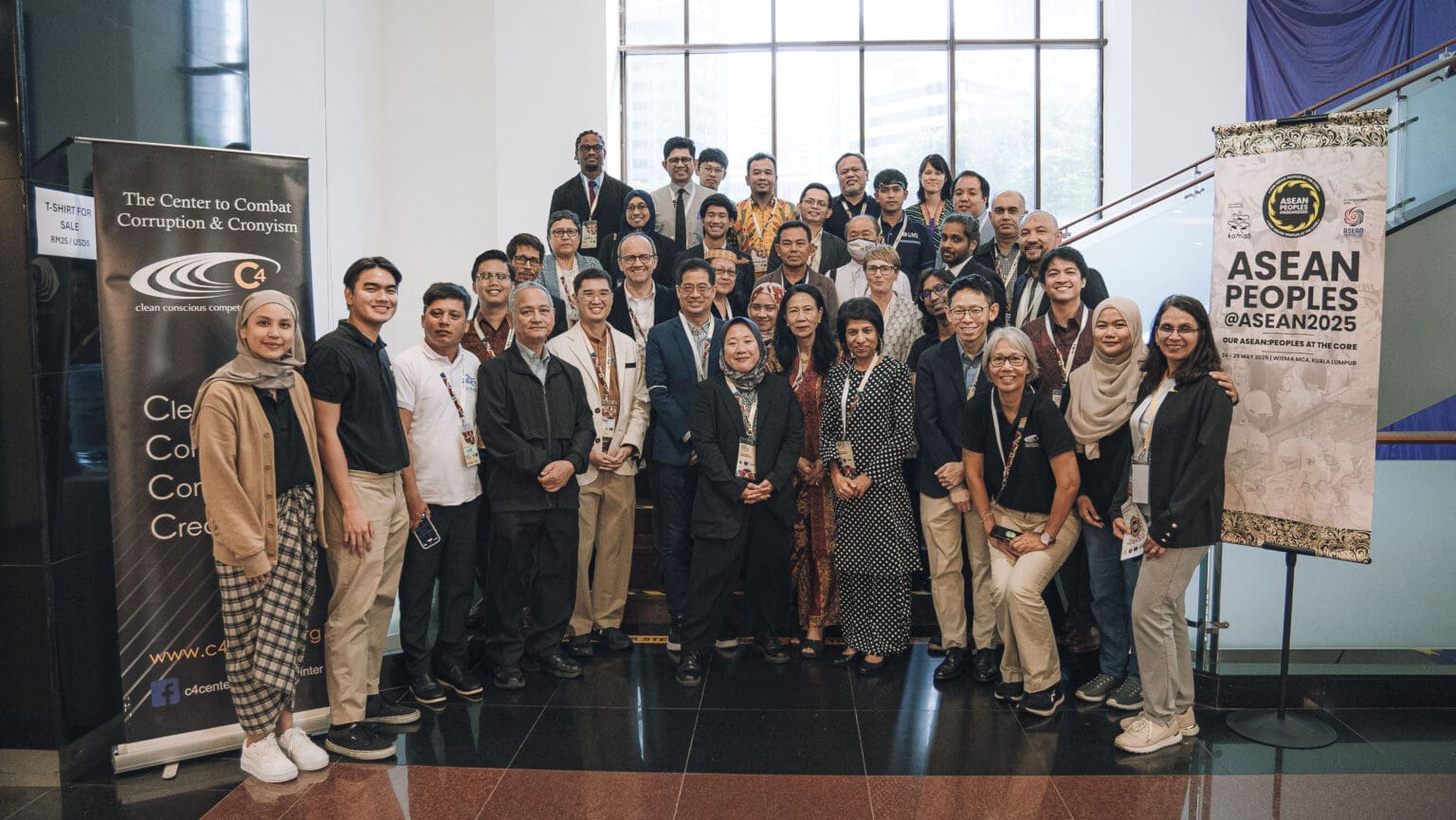
Thematic Reporting for CSO Forum : Enhancing Inclusivity and Sustainability @ASEAN PEOPLES 2025
The objective of the session is to gather case studies and experiences on the dangers of whistleblowing when speaking out against environmental crimes, accompanying SLAPP suits and recommend points for better protection.
SEA-ACN Workshop | Strengthening Cross-Border Collaboration to Reform Government Procurement and Combat Corruption in Southeast Asia
Discover how a regional workshop led by KRAC C4 Center and SEA-ACN brought together experts from multiple countries to address gaps in public procurement reforms, share best practices, and strengthen efforts against corruption across Southeast Asia.
SEA-ACN Roundtable | Unclear Government Procurement Processes Could Pave the Way for Corruption
Lack of transparency in public procurement processes can facilitate corruption—what measures can we take to mitigate these risks? Discover regional strategies to combat corruption in government procurement from the SEA-ACN Roundtable insights.